
You’ve Been Upgraded: 5 Airports That Are Changing the Traveler Dining Experience
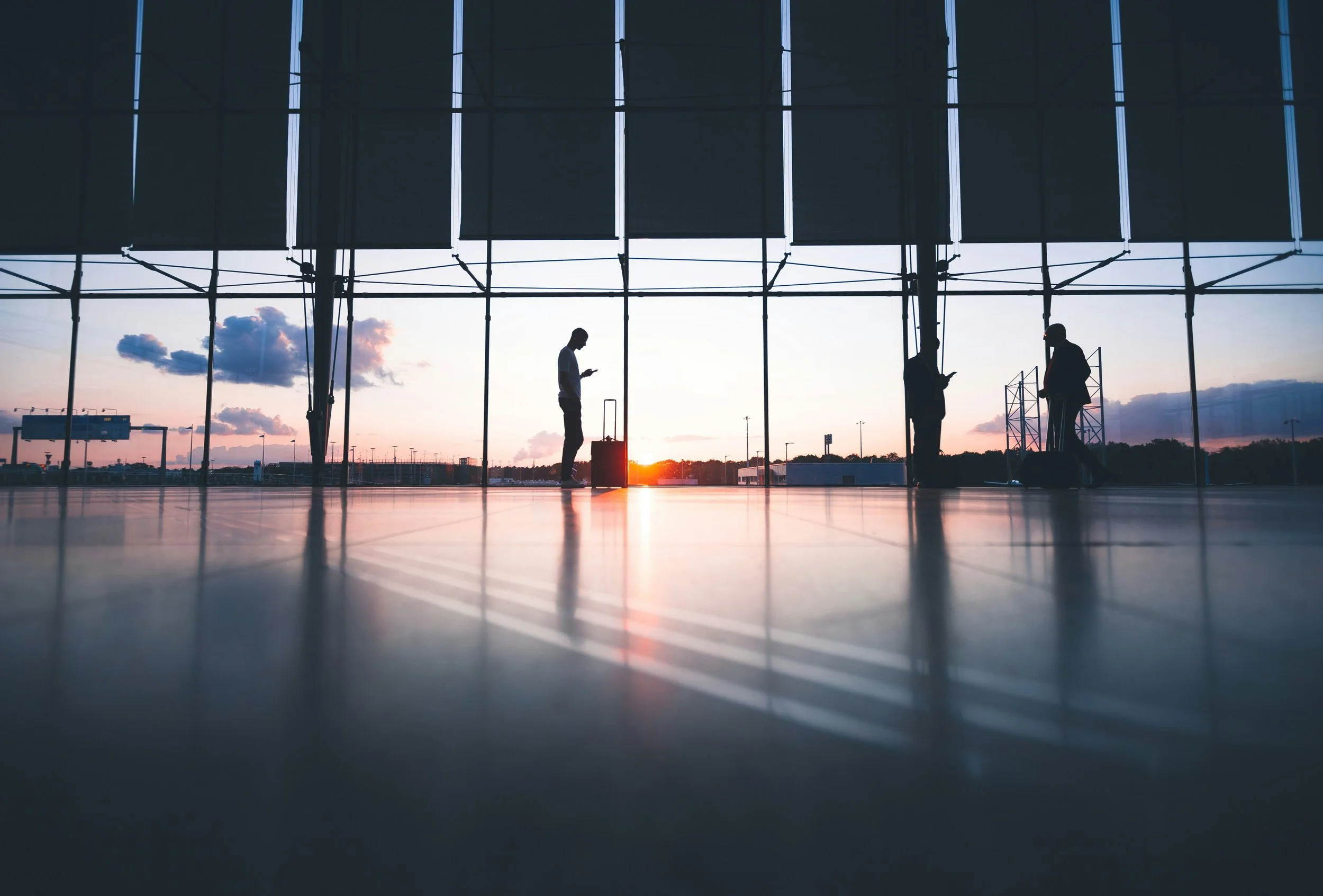
From local tasting rooms and hidden cocktail bars to restaurant-style lounges and elevated grab-and-go, airport food and beverage is becoming part of the journey.
The Davella Studios team’s extensive experience designing food and beverage environments for Delta and Virgin Atlantic across several of their hubs, along with airport dining concepts, has kept us deeply engaged in airport F&B, and closely watching how the category continues to evolve. And we’ve seen some interesting developments.
First the challenge. Airports have to feed enormous numbers of people moving at completely different speeds. One traveler has three hours before an international flight. Another has twenty minutes to make a connection. All of it has to work within the operational realities of an airport.
For years, the answer was largely functional and built for mass appeal. Food courts, grab-and-go markets, and your run-of-the-mill sports bar the standard business or leisure traveler. Even airline lounges had a familiar footprint across brands.
Fast forward to now. The airport food and beverage experience is changing in a big way, and this evolution is giving way to a new traveler experience.
Across the country, airports and lounge operators are introducing concepts that look increasingly like the upscale restaurants, bars, and specialty food experiences travelers seek outside the terminal. Local chefs and brands are replacing generic concessions and tasting rooms are appearing beyond security.
Even Airline lounges are experimenting with with new food concepts including made-to-order, barista service, and restaurant-style dining.
Here are five airports showing where airport food and beverage may be heading next.
1. Portland, OR (PDX): A Taste of Portland
In a very clever way, Portland International Airport is using food and beverage as a story to celebrate the city with travelers. Twenty-one additional regional businesses are joining PDX in 2026, building on an airport concessions strategy centered heavily around Oregon brands.
Steven Smith Teamaker has opened a full tasting room. Portland's women-owned Freeland Spirits offers flights of its Oregon-made gin and whiskey along with cocktails. Straightaway Cocktails has a tasting room and retail shop. Kure Superfoods brings cold-pressed juices, smoothies and grain bowls, while Lola's Cafe adds breakfast and deli meals. Even nine new grab-and-go locations are being developed through partnerships with Oregon businesses.
Elsewhere in the terminal, PDX has brought in restaurants including Grassa, which makes pasta to order, while Loyal Legion combines a beer hall featuring 96 Oregon beers with a speakeasy and other spaces.
It's a significant departure from the airport model where travelers see essentially the same restaurant brands regardless of what city they're in. At PDX, food and beverage is a celebration of Portland and becomes part of the destination.
2. New York, NY (JFK): Grab-and-Go Gets a Luxury Treatment
Meanwhile, American Airlines is testing a different food and beverage model at JFK.
Its new 3,700-square-foot Provisions by Admirals Club in Terminal 8 is specifically designed for eligible travelers who want premium food and beverage without a traditional lounge stay.
Instead of building the experience around a buffet and extended seating, Provisions is built around several service points. Prepared hot and cold foods are available to take away, with breakfast choices including yogurt, fruit, pastries and more substantial meals. Vegetarian options are available throughout the day, and canned and bottled beverages are designed to be taken on the go.
The centerpiece is American's first dedicated lounge barista bar, where travelers can order customized hot and cold Lavazza coffee drinks. It's essentially applying the expectations of a good café to airport grab-and-go.
That's what makes the concept interesting from a foodservice perspective. Convenience has traditionally involved a tradeoff. If you need something quickly, you accept fewer choices, less customization and often lower quality.
Provisions asks whether speed itself can become a premium food and beverage experience. For a traveler with a tight connection, a fresh meal and barista-made coffee they can take with them may be considerably more valuable than another buffet.
3. Denver (DEN): OpenTable at the Airport
Denver International Airport has taken local airport dining considerably further than putting a regional beer on the menu.
In 2025, DEN opened four local food and beverage concepts together on Concourse A: Williams & Graham, Tocabe, The Bagel Deli and D Bar. The airport says the additions are part of its effort to showcase Denver's local dining scene to travelers.
The Bagel Deli brings a Denver institution dating to 1967 into the terminal. Chef Keegan Gerhard's D Bar offers food, drinks and desserts. While Tocabe serves contemporary Native American cuisine using ingredients including bison, wild rice, frybread and corn.
Then there's something you don’t see every day, Williams & Graham. The original Denver cocktail bar is known for hiding behind what appears to be a bookstore. Its airport location carries the idea through: travelers enter through a wooden bookcase into a cocktail bar overlooking the airfield. It's playful, but there's a serious food and beverage idea underneath it.
DEN's strategy has been recognized internationally: its concessions program won multiple 2026 Airport Food & Beverage Awards, including honors for sense of place, bar/pub, food hall, food-to-go and overall food and beverage offerings.
Yet another example of how the airport is becoming part of the travel experience. You are starting to see the color of a city before you even leave the airport.
4. Dallas Fort Worth, TX (DFW): Build More Ways To Eat
If you think the phrase ‘More Ways To Eat’ comes from Texas, you’d be correct.
At DFW more than a dozen new dining, shopping and customer amenities opened at DFW in 2026 alone, joining a concessions program with more than 200 offerings. The airport is deliberately adding both North Texas businesses and national concepts as part of a larger effort to reflect the region while giving travelers more options.
The foodservice expansion is happening at multiple levels. Local and regional concepts are becoming a larger part of the terminal mix. Airport-first concepts and new restaurant brands are being added. New lounges and premium spaces are expanding the higher-end dining experience.
Behind the scenes, DFW just opened a 90,000-square-foot central receiving and distribution facility to support the food, beverage and retail operations spread across its terminals.
Better airport food requires the infrastructure to support hundreds of food and retail outlets operating inside one of the country's busiest airports. DFW is effectively building a food and beverage ecosystem at city scale.
5. Las Vegas, NV (LAS): Lounge Fine Dining
Las Vegas offers perhaps the clearest example of how far the airport lounge food experience is moving.
In March, American Express opened Sidecar by The Centurion Lounge at Harry Reid International Airport. Sidecar has only 33 seats and is available to eligible cardmembers within 90 minutes of departure. However, the buffet is decidedly missing.
Instead, guests sit down, scan a QR code and order from a rotating menu of gourmet small plates developed by chefs from American Express's Culinary Collective. Food is delivered directly to the table. The beverage program includes signature cocktails, nonalcoholic drinks, and wines selected by sommelier Helen Johannesen.
Opening menus included dishes such as mini lobster rolls, crushed cucumber salad, chicken Parmesan sliders and avocado toast with schug labneh, while menus rotate to introduce dishes from different chefs. It's much closer to a small restaurant or cocktail bar than the traditional image of an airline lounge.
Because the concept is specifically designed for a shorter visit, the foodservice model follows suit: small plates, table delivery and a tightly curated beverage program rather than an expansive self-service buffet.
For years, premium airport food largely meant more: bigger buffets, more choices, larger lounges.
Sidecar suggests another possibility. Premium can also mean smaller, faster and curated.
Food Is Becoming Part of the Airport Experience
The interesting thing about these five airports is they’re solving different traveler needs through food and beverage.
Portland is using local restaurants and tasting rooms to create a sense of place.
JFK is rethinking premium grab-and-go for travelers who don't have time for a traditional lounge.
Denver is bringing recognizable local restaurants and bars directly into the terminal.
Dallas/Fort Worth is creating enough variety (and the infrastructure behind it) to serve an enormous range of travelers and occasions.
Las Vegas is turning the airport lounge meal into a restaurant experience.
Those are five very different approaches, but they reflect the same larger shift. Food and beverage can influence how travelers spend their time, how they experience a city, how they perceive a lounge and even how they remember the airport itself.
For those of us who design foodservice and consult in hospitality to create food and beverage programs it becomes even more imperative to understand who the traveler is, how much time they have, what they need at that particular moment, and designing the food, beverage, service and space around it.
The ripple effect of these trends will impact every major airport and brand within that space. Travelers will have new expectations, and owners, developers, and hospitality concepts will all be asked to turn the airport into pleasurable part of the travel experience.
Diana Sproveri leads Experience and Food & Beverage Strategy for Davella Studios.